
Please note: The content below may contain affiliate links. If you make a purchase through these links, we could earn a commission, at no additional cost to you.
You’re losing shots. Not because you lack talent, and not because you didn’t spend enough money, because the marketing department of major camera manufacturers has successfully convinced you that “More Megapixels” equals “Better Photography.” It is the single greatest lie in our industry.
If you’re shooting a wedding in a dimly lit cathedral, a 61-megapixel sensor is not your friend; it’s a liability introducing noise and filling your buffer. If you’re tracking a falcon at 50mph, “8K Video” is a useless spec on a spec sheet.
Professional photography isn’t about the highest number on the box, it’s about reliability. The underlying mechanism—the autofocus algorithms that predict movement, the thermal management that prevents shutdowns, and the sensor readout speeds that eliminate rolling shutter. We analysed the engineering schematics and long-term user reports of the top UK market contenders to find the only 5 options worth your billable hours.
TL;DR: The Quick Verdicts
| Rank & Product | Best For… | The “One-Line” Verdict |
|---|---|---|
| 1. Sony Alpha 7 IV | The Hybrid Shooter | The new industry baseline for resolution and autofocus reliability. |
| 2. Canon EOS R6 | The Event Pro | A low-light monster built on the chassis of a flagship. |
| 3. Panasonic Lumix G9 | The Wildlife Specialist | Pro-grade ergonomics and stabilization at an enthusiast price. |
| 4. Nikon Z 50 | The Travel Scout | Exceptional optical potential in a body that fits in a jacket pocket. |
| 5. Sony ZV-E10 | The Content Creator | A video-first tool that serves as a capable, ultra-light B-cam. |
The Visual Standard: How We Grade Quality
We do not use vague terms like “sharpness” or “feel.” We grade on three Critical Performance Metrics that determine if a tool can survive a paid shoot.
- Acquisition Latency: This measures the time between your intent and the capture. It encompasses Autofocus (AF) calculation speed, buffer clearance rates, and startup time. If the camera thinks slower than you do, it fails.
- Photon Efficiency: Not just “ISO performance,” but how the sensor converts light to data. We look for Dual Gain architectures and Back-Illuminated (BSI) structures that preserve dynamic range in hostile lighting.
- Tactile Integration: The physical interface. Does the grip support heavy glass? Are the buttons customizable to muscle memory? A camera must be an extension of the hand, not a computer you have to program mid-shoot.
#1. Sony Alpha 7 IV
The perfectly balanced 33MP sensor makes this the most versatile workhorse on the market.

Sony Alpha 7IV Full-Frame Mirrorless Camera with 28-70mm Lens (33MP, 4K 60p Video, Real- Time Eye AF, Fast Hybrid AF, Vari-Angle LCD, for Hybrid shooters,…
- Class-leading Autofocus reliability
- 33MP “Goldilocks” resolution
- Anchor Spec: 33MP Exmor R BSI Sensor
- Secret Sauce: BIONZ XR Processor
- Best For: The Hybrid Shooter
The Engineering & Design
The “Secret Sauce” here is the BIONZ XR processor paired with a 33MP Exmor R Back-Illuminated CMOS sensor. Sony didn’t just chase resolution; they chased readout speed. This BSI design places the wiring behind the photodiodes, increasing light collection efficiency while allowing the BIONZ XR chip to run complex Real-time Tracking algorithms for birds, animals, and humans simultaneously. It is a computational photography beast wrapped in magnesium alloy.
The Performance Experience
Using the A7 IV feels like cheating. The 759 phase-detection AF points cover 94% of the sensor, meaning you can compose carelessly and still nail focus. The jump to 33 megapixels is the “Goldilocks” zone for pros—enough resolution for serious cropping or commercial print work, but not so dense that it cripples your storage or low-light performance. With 15 stops of dynamic range, you can recover shadow detail that would have been crushed black in previous generations.
What Customers Say About Sony Alpha 7 IV
- The Frustration: The 1.5x crop when shooting 4K 60p video. It forces wide-angle shooters to change lenses or lose their field of view.
- The Consensus: It is a “Hybrid Workhorse.” Users consistently note that the autofocus is “sticky” and miles ahead of older models, locking onto eyes even when subjects turn away.
- The Praise: The autofocus reliability. One user noted they “stopped bringing a gimbal” because the Active stabilization mode combined with the AF allows for effortless handheld run-and-gun shoots.
The “Fatal Flaw”
The menu system, while improved, is still dense, but the real issue is the rolling shutter in electronic shutter mode for fast-moving subjects. While better than its predecessor, it still lags behind stacked-sensor flagships, meaning you must rely on the mechanical shutter for sports to avoid warping golf clubs or baseball bats.
Who Is This For?
The modern “Hybrid” Professional. If you bill for portraits on Saturday and shoot video interviews on Tuesday, this is your camera.
#2. Canon EOS R6
A 1D X Mark III sensor in a mirrorless body creates the ultimate low-light weapon.

Canon EOS R6 Mirrorless Digital Camera Body, Black
- Incredible Low-Light Performance
- Flagship 1D X Mark III Sensor
- Anchor Spec: ISO 102,400 Max
- Secret Sauce: Deep Learning AF & 8-stop IBIS
- Best For: The Event Pro
The Engineering & Design
Canon made a bold engineering choice: they took the 20.1MP sensor from their £6,000 flagship 1D X Mark III and put it in a £2,200 body. Lower resolution means larger individual pixels (photosites), which collect more light. Combined with Deep Learning Algorithms for autofocus and an In-Body Image Stabilizer (IBIS) that offers up to 8 stops of correction, this camera is engineered to see in the dark.
The Performance Experience
The spec sheet says 20 fps, but the experience is pure speed. The buffer is virtually bottomless for standard shooting. The “Secret Sauce” is the confidence it gives you in terrible lighting. You can shoot at ISO 12,800 and get usable, clean files for client delivery. The Dual Pixel CMOS AF II is arguably the only system that rivals Sony, feeling organic and instantaneous. It doesn’t hunt; it just knows.
What Customers Say About Canon EOS R6
- The Frustration: The lack of a top-plate LCD status screen (found on the R5 and older DSLRs) irritates legacy shooters who want to check settings without looking through the viewfinder.
- The Consensus: Users agree it is a “Low Light Beast.” Many pros admit they considered switching to Sony until this camera dropped.
- The Praise: The ergonomics. One reviewer, a “110 kg man,” praised the grip for being substantial enough for professional handling, unlike smaller mirrorless bodies.
The “Fatal Flaw”
20.1 Megapixels. For 90% of work, it is fine. But for landscape pros or commercial photographers who need to crop heavily or print billboards, the resolution ceiling is a hard limit. You cannot crop your way to a composition; you have to get it right in-camera.
Who Is This For?
The Wedding and Event Photographer. When you are in a dark reception hall and cannot use flash, this camera saves the job.
#3. Panasonic Lumix DMC-G9
The best ergonomics in the class, hampered only by the physics of its sensor size.

Panasonic Lumix DMC-G9 Mirrorless Digital Camera – Black
- Superior Ergonomics & Handling
- High-Res 80MP Mode
- Anchor Spec: 20.3MP w/ 80MP Shift
- Secret Sauce: Dual I.S. II Stabilization
- Best For: The Wildlife Specialist
The Engineering & Design
Panasonic understands handling. The G9 features a massive electronic viewfinder (EVF) and a grip that rivals DSLRs. The engineering marvel here is the High-Resolution Mode, which shifts the 20.3MP sensor eight times to create an 80MP RAW file. It also boasts one of the industry’s best stabilization systems (Dual I.S. II), which synchronizes the lens and body IS for rock-steady shots at slow shutter speeds.
The Performance Experience
This is a machine gun. It shoots 20 fps with continuous AF and up to 60 fps with locked focus. For nature photographers, the 2x crop factor of the Micro Four Thirds sensor turns a 200mm lens into a 400mm equivalent, giving you incredible reach in a compact package. The menus are logical, designed by photographers rather than engineers, making customization intuitive.
What Customers Say About Panasonic Lumix DMC-G9
- The Frustration: Low-light performance. Users note “much noise starting from ISO 3600,” a physical limitation of the smaller sensor.
- The Consensus: It is the “underrated king.” Owners feel they got flagship build quality for a fraction of the price of full-frame competitors.
- The Praise: The ruggedness and weather sealing. One user reported it “did not let me down” even in snowy conditions in Seattle, proving its worth for field work.
The “Fatal Flaw”
The Shutter Button sensitivity. Multiple users report the shutter button is “hair-trigger” sensitive, leading to accidental exposures before you are ready. Combined with the smaller sensor’s struggle in low light, it requires discipline to use effectively.
Who Is This For?
The Wildlife and Nature Photographer. If you hike miles and need extreme telephoto reach without carrying 10kg of glass, this is the only choice.
#4. Nikon Z 50
Nikon’s legendary optics in a chassis that fits in your coat pocket.
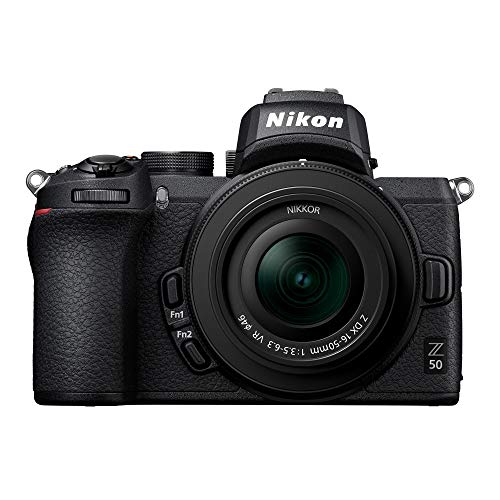
Z 50 DX-format Mirrorless Camera Body w/NIKKOR Z DX 16-50mm f/3.5-6.3 VR
Access to Z-Mount Optics
Anchor Spec: 20.9MP DX BSI CMOS
Secret Sauce: Z-Mount Flange Geometry
Best For: The Travel Scout
The Engineering & Design
The Z 50 uses the Nikon Z-mount, which has the largest diameter and shortest flange distance in its class. This engineering geometry allows for lenses that are sharper from corner to corner. Inside is a 20.9MP DX-format (APS-C) BSI CMOS sensor. It strips away the bulk of a DSLR while retaining the deep grip and robust dial layout Nikon users demand.
The Performance Experience
It’s “Small but Mighty.” While it lacks the spec-sheet dominance of the Sony A7 IV, the image quality from the Z-mount glass is clinical. The 11 fps burst rate is respectable for street and travel work. The experience is defined by portability; it is a camera you will actually take with you, rather than leaving it in the hotel room because it’s too heavy.
What Customers Say About Nikon Z 50
- The Frustration: The packaging and shipping quality (specific to Amazon reports), but technically, the lack of In-Body Image Stabilization (IBIS). You rely entirely on lens-based VR (Vibration Reduction).
- The Consensus: “Great quality, small size.” It is viewed as the perfect second body or travel camera for Nikon DSLR shooters.
- The Praise: The transition experience. Nikon DSLR users love that the adapter works seamlessly with their old F-mount lenses, making the switch to mirrorless painless.
The “Fatal Flaw”
Battery Life. The compact form factor necessitates a smaller battery. For a pro accustomed to shooting all day on one charge, the Z 50 requires carrying spares. It is not built for a 12-hour wedding day as a primary camera.
Who Is This For?
The Travel Photographer or Street Shooter. It delivers professional file malleability in a package that is inconspicuous and lightweight.
#5. Sony ZV-E10
A vlog camera masquerading as a still camera, excellent for B-roll but compromised for photos.

SONY Alpha ZV-E10 – APS-C Interchangeable Lens Mirrorless Vlog Camera – Black
- Dedicated Vlogging Features
- Product Showcase Mode
- Anchor Spec: 24.2MP APS-C Exmor
- Secret Sauce: Background Defocus Button
- Best For: The Content Creator
The Engineering & Design
This camera is built around a 24.2MP APS-C Exmor CMOS sensor. The engineering priority here was vlogging workflow. It features a “Product Showcase” setting that instantly shifts focus from a face to an object held up to the lens, and a dedicated “Background Defocus” button. It removes the mechanical shutter complexity to save weight and cost.
The Performance Experience
For a photographer, this is a jarring experience. There is no Viewfinder (EVF). You are forced to compose shots at arm’s length using the LCD screen, which is unstable for telephoto work and difficult in bright sunlight. However, the sensor itself is excellent, sharing DNA with the higher-end a6000 series, delivering sharp, vibrant images if you can get past the ergonomic hurdles.
What Customers Say About Sony ZV-E10
- The Frustration: “Focus was not as fast and reliable” with third-party lenses compared to native Sony glass.
- The Consensus: It is the ultimate “Content Creator” starter pack. Users love the flip-out screen and the specialized video modes.
- The Praise: The price-to-performance ratio for video. It is widely considered a “budget beast” for YouTube and streaming.
The “Fatal Flaw”
The lack of an Electronic Viewfinder (EVF). For a “Professional Photography” list, this is nearly a disqualification. Shooting stills without a viewfinder destabilizes your stance and makes critical composition difficult. It is a video camera that can take photos.
Who Is This For?
The YouTuber who needs high-quality thumbnails. It serves as a fantastic backup video body, but should not be your primary stills camera.
The Final Verdict: Best Buys of the Top 5
The Professional/Power User: Sony Alpha 7 IV If you earn your living with a camera, buy this. The 33MP resolution is the sweet spot for commercial work, and the autofocus reliability is money in the bank. It is the only camera on this list that feels future-proof for the next 5 years of hybrid demands.
The Value/Budget Play: Panasonic Lumix G9 For under £900, you get a chassis and feature set that competes with £2,000 cameras. If you can live with the Micro Four Thirds low-light limitations, the stabilization and ergonomics are unmatched per pound spent.
The Niche Specialist: Canon EOS R6 If you shoot events, concerts, or weddings where flash is prohibited, the R6 is non-negotiable. Its ability to see in the dark allows you to capture moments that the higher-resolution cameras will lose to noise.
2026 Outlook: The Future of Mirrorless
Based on the trajectory of the A7 IV and R6, here is where the industry is heading:
Trend #1: The Death of the Mechanical Shutter We are seeing the transition to “Global Shutters” and stacked sensors (like in the high-end Sony Alpha 1). The ZV-E10 already skips the viewfinder; expect pro cameras to eventually drop the mechanical shutter entirely as readout speeds increase, eliminating rolling shutter artifacts without moving parts.
Trend #2: Computational RAWs The Panasonic G9’s “High-Res Mode” is just the start. Expect cameras to integrate more computational photography features—like handheld multi-shot HDR and noise reduction—directly into RAW files, blurring the line between phone AI and pro hardware.
Trend #3: AI-Driven “Intent” Focus Canon’s “Deep Learning” is currently reactive (finding an eye). The next generation will be predictive, using AI to understand the sport or scene to pre-focus on where the action will be, not just where it is.
Further Reading
Don’t just trust the spec sheet. To truly understand your tools, consult these resources:
- The “Bible” Book: “The Camera” by Ansel Adams. While the tech has changed, the physics of light, exposure, and visualization remain the immutable laws of our craft.
- The Technical Deep Dive: DXOMark.com. For purely objective, scientific sensor data measuring dynamic range, color depth, and low-light ISO performance.
- The Community Hub: FredMiranda.com. The serious enthusiast and professional forum where gear is discussed based on field usage, not unboxing hype.