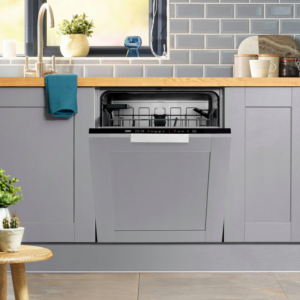
Hotpoint HSICIH4798BI 45cm Integrated Slimline Dishwasher 10 Place Settings
£359.99
Hotpoint HSICIH4798BI 45cm Integrated Slimline Dishwasher is a built-in slimline appliance designed for small kitchens, cleaning up to 10 place settings per cycle. Its 45cm width and integrated configuration suit compact or fitted kitchen layouts while preserving the exact model identity.
Hotpoint HSICIH4798BI — 45cm integrated slimline dishwasher for smaller kitchens
The Hotpoint HSICIH4798BI is an integrated slimline dishwasher specified as 45 cm wide with capacity for 10 place settings. It’s targeted at households where under‑counter width is limited — small kitchens, flats or couples — and for buyers who want a built‑in machine rather than a freestanding appliance. The primary trade‑offs are clear: a slim 45 cm footprint saves lateral space but offers a smaller per‑cycle load than a full‑width dishwasher, and being integrated means the way the door, controls and face panel sit in your kitchen will shape the daily user experience.
Key practical details that change ownership costs and convenience — control location, available programmes, cycle times, energy and water use, and noise level — aren’t supplied here. The meaning of the "BI" suffix isn’t defined in the provided data and may indicate a built‑in variant; confirm finish, exact dimensions and what’s included from full technical information before proceeding.
Loading and rack ergonomics to expect
Because the machine is a slimline integrated design, plan loading around narrower rack spacing and reduced lateral room compared with full‑width dishwashers. Stagger plates, stack cutlery in baskets rather than loose, and use smaller pots and bowls where possible to make the most of each cycle. Small adjustments — running half loads only when necessary, arranging tall items to the sides, and nesting similarly shaped items — will improve both capacity and wash coverage.
Controls and everyday access
Control placement and visibility materially affect daily use. Top‑mounted controls are hidden when the door is closed and give a cleaner fitted look, while front‑facing controls are visible and easier to access when the appliance is built in. The source data doesn’t state which this model uses, so confirm control location before purchase. Also check whether buttons are mechanical or touch‑sensitive, and whether there are delay‑start or quick‑wash shortcuts that you’ll use regularly.
Routine care, filters and small servicing
Expect the normal upkeep all dishwashers need: clearing a removable filter of food debris, wiping door seals, and occasionally running an empty maintenance cycle to avoid deposits. Confirm how the filter is accessed on this unit (front‑facing or under‑rack access) because awkward filter placement increases the chance of neglected maintenance. Check whether common consumables (e.g. salt and rinse aid) have easy‑to‑reach reservoirs and be prepared to inspect inlet and drain hoses periodically for leaks or kinks.
Operational details you must verify
Before committing, obtain the full technical sheet for specifics that change ownership costs and convenience:
- Available programmes and approximate cycle times (including any ECO or express options).
- Energy and water consumption figures and the appliance’s noise rating (dBA).
- Exact external and built‑in depth/height dimensions, plus finish/door‑panel compatibility.
- What’s included in the box (hoses, fixings, door‑mount kit) and warranty terms.
Those details determine running cost, placement in an open plan home, and whether the unit will fit and behave as you expect once fitted into your kitchen.
Installation, connections and last‑minute checks
Before you commit, get definitive answers from the retailer or technical sheet on these installation‑critical points — the source data omits them.
- Exact built‑in and external dimensions: full height and depth, usable cavity depth and any required clearances (don’t assume standard fits).
- Door‑panel mounting: whether a customer door or kit is required/included, hinge type and if the appliance supports a heavy/custom cabinet door.
- Electrical needs: supply type, whether a mains lead/plug is provided, recommended fuse/isolator and outlet positioning for installers.
- Plumbing details: inlet fitting type and pressure range, hose lengths, drain connection method and whether hoses/fittings are supplied.
- Control placement and visibility when fitted (top or front controls) and basic interface (buttons vs touch) that affects daily access.
- Noise rating (dBA), energy/water consumption figures and typical cycle times — important for siting and running cost expectations.
- Maintenance access: filter location and how consumables (salt, rinse aid) are reached and refilled.
- Confirm variant identifiers (what “BI” denotes), manufacturer part numbers/EAN, included accessories and warranty/service terms.